Crew scheduling platform · Live project
YardShift
A focused operations tool that helps small mowing businesses organize customers, recurring jobs, routes, crews, and invoices—without the weight of enterprise lawn software.
Visit yardshift.co arrow_outward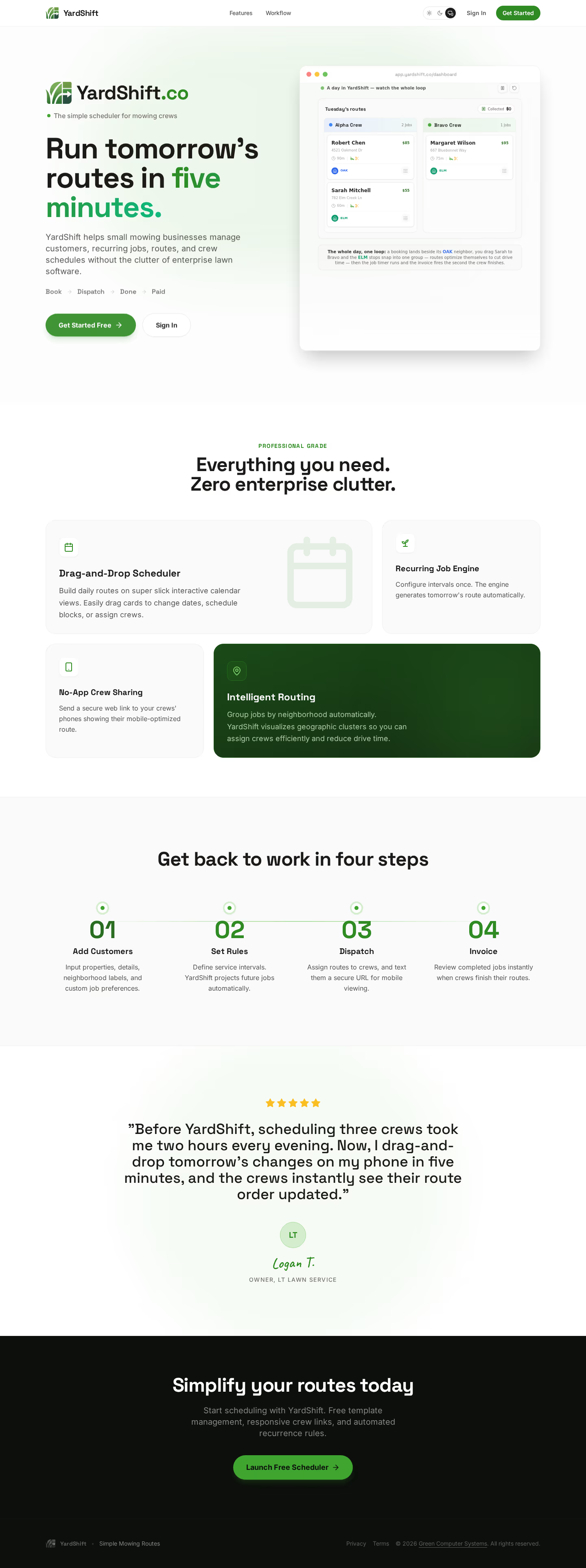
The idea
Small mowing crews need to answer a practical question every evening: who is going where tomorrow? General field-service platforms can answer it, but often bring far more setup and complexity than a small operator needs.
YardShift keeps the workflow narrow: add customers, set recurring rules, dispatch routes, then review completed work and invoice it.
What I built
The application combines customer and job management with a visual scheduler, crew assignments, neighborhood-based route organization, mobile crew links, and billing tools. The public site explains the same product loop the application is designed around: book, dispatch, complete, and get paid.
Drag-and-drop scheduling
Build daily routes on an interactive calendar, move jobs between dates, and assign work to crews.
Recurring job engine
Define service intervals once and let YardShift generate the next route automatically.
Route organization
Group nearby jobs so crews spend less time driving and more time working.
No-app crew sharing
Send each crew a mobile-friendly route link without requiring another app or account.
The product challenge
Scheduling software succeeds when it reduces decisions instead of adding administrative work. YardShift has to make recurring rules powerful without making them hard to configure, while keeping route changes fast enough to handle weather, cancellations, and the everyday surprises of field work.


Where it stands
YardShift is live with scheduling, recurring jobs, customer management, crew workflows, route organization, and billing foundations in place. This first version of the case study establishes the product and its intent; the next refinement can dig into the origin, interface decisions, architecture, and lessons from building it.